Innovating to
protect the future
The highly innovative ABWR (HI-ABWR) is based on an international standard of ABWR design that meets the regulatory requirements of the UK and Europe has received design acceptance confirmation from the UK, reflecting lessons learned from the Fukushima Daiichi Nuclear Power Station accident.
The HI-ABWR is a next-generation light water reactor that incorporates new safety mechanisms.
It is equipped with innovative safety features,
such as disaster countermeasures,
control of unexpected accident escalation and
reducing the reactor's impact on the environment.
In addition, it contributes to the realization of
carbon neutrality through the reduction of
spent fuel using high burnup fuels and
the stabilization of electric power systems
by load following operations.

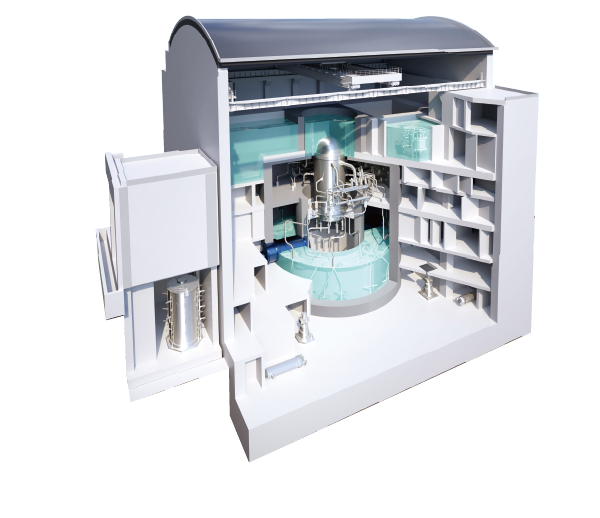
HI-ABWR is designed to withstand a wide range of external hazards, including earthquakes, tsunamis, aircraft impact, internal fires, and flooding. A robust reactor building and the physical separation of safety systems help minimize the effects of such events.
In the unlikely event of an accident, HI-ABWR incorporates passive safety systems that operate using natural forces without relying on external power or operator actions. These systems enable reactor core and molten fuel cooling, containment of radioactive materials, and other safety functions, helping suppress accident progression and minimize environmental impacts.
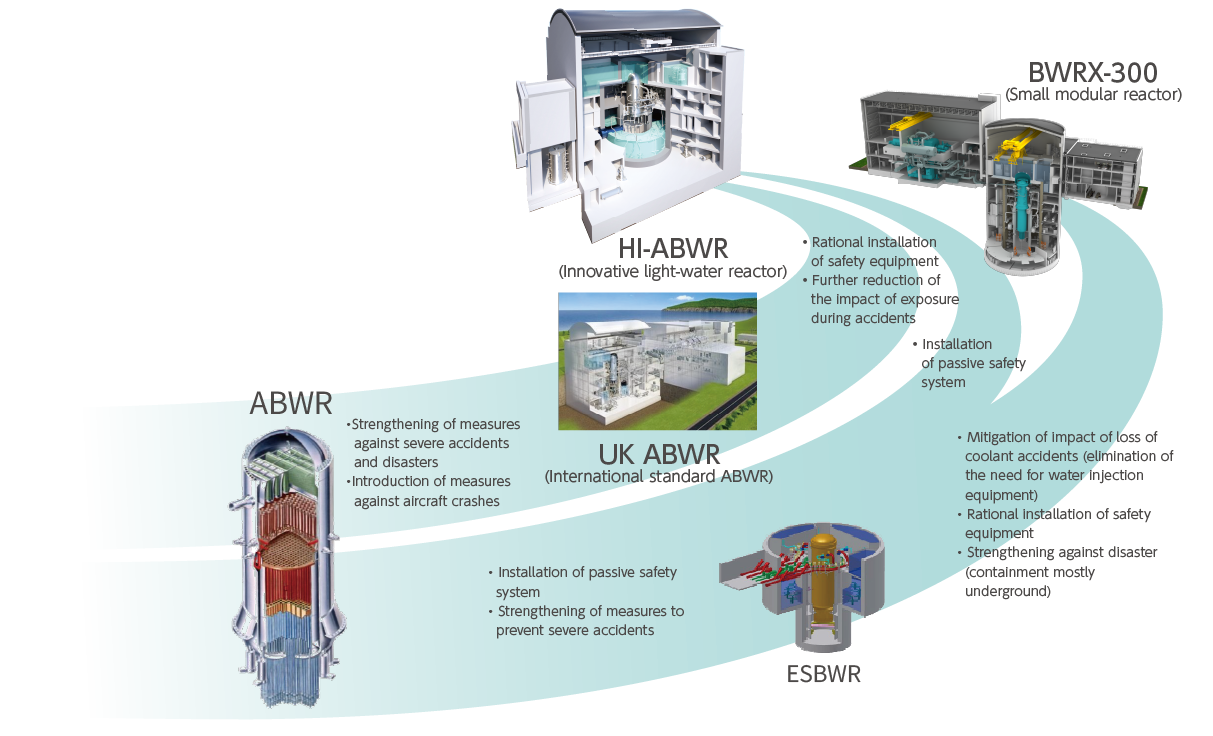
Hitachi's BWR technologies continue to evolve.
Hitachi's initiatives in the nuclear energy business began with a research reactor which started operating in 1957.
Since we started commercial operation of the Japan's first commercial light-water reactor in 1970, we have supplied many nuclear plants.
Incorporating the experience from the Fukushima Daiichi Nuclear Power Station accident, we will promote reliability improvement activities and the development of preventive maintenance technology and pursue increased safety.
Download the HI-ABWR brochure PDF from the link on the right.
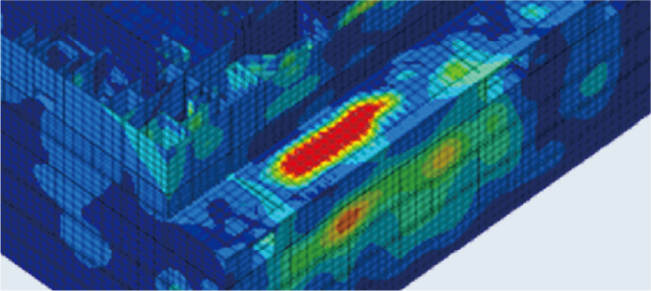
The exterior wall of the reactor building is designed to withstand airplane crashes and minimizes not only the area of physical impacts but also the range of vibration propagation after an airplane crashes.
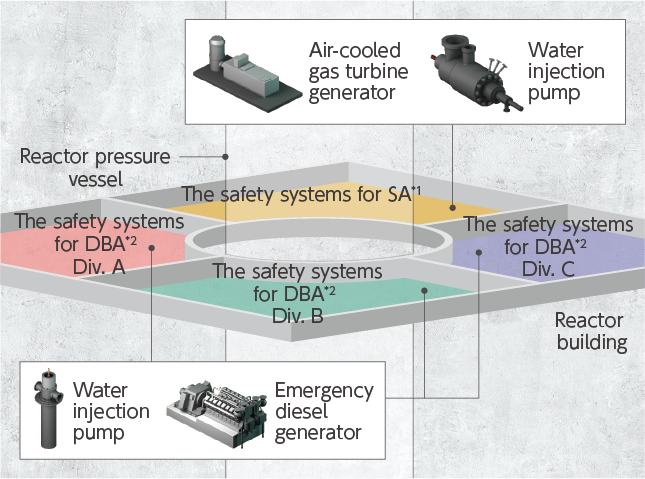
In order to prevent significant damage to the reactor core during an accident, the safety systems for design basis accidents and the safety systems for severe accidents, are located in four areas separated using fire-resistant, water shut-off walls to minimize the impact of internal fires and flooding caused by pipe breaks to each area.
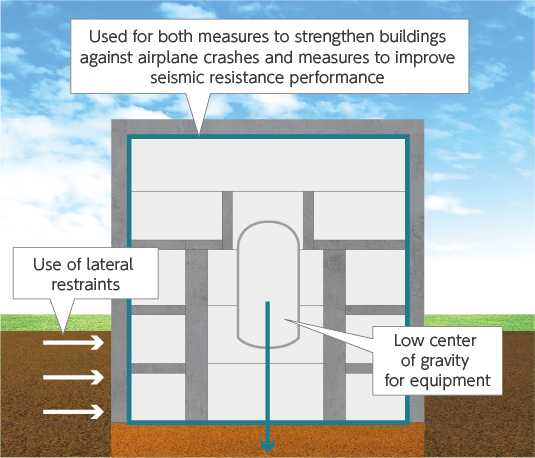
Toughening buildings
The robust exterior wall is built to be robust in the event of a physical impact due to airplane crashes, etc. and is also seismic resistant, protecting the building from physical damage and earthquake-caused damage.
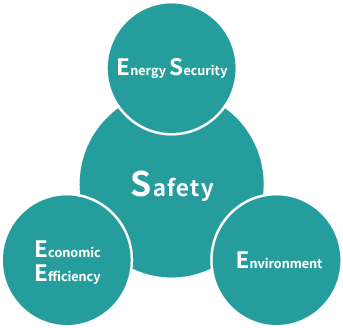
Maintaining safety and limiting the increase in building materials improves economic efficiency.
Seismic-resistant construction based on lateral restraint In addition to the reinforced concrete constituting the building, lateral restraint using rocks and backfilling earth around the building strengthens its anti-seismic capabilities.
Improving seismic-resistance performance by lowering the center of gravity and highly aseismic design The center of gravity of the overall building is lowered by installing heavy equipment on the lower floors and reducing the slab above to upgrade aseismic capabilities. Highly aseismic design is adopted in equipment as well as the building to improve the seismic resistance of the entire power plant.
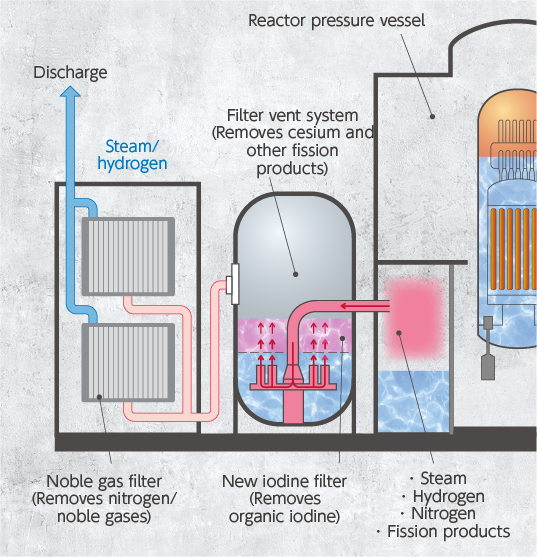
In addition to the conventional filter vent system for reducing emissions of radioactive substances into the environment, a noble gas filter and a new iodine filter--the latter capable of removing organic iodine, traditionally difficult to remove--have been installed to remove radioactive noble gases and organic iodine from the steam and hydrogen emitted into the air. This helps reduce the need for resident evacuation even if a severe accident were to occur.
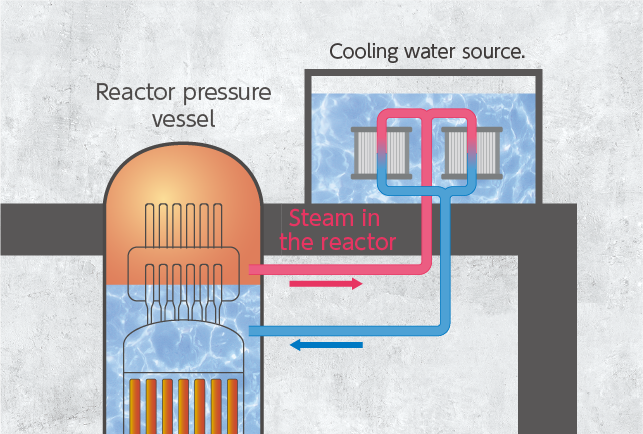
The cooling water source, which is installed at a higher elevation than the reactor pressure vessel, cools the steam from the reactor and circulates it to cool the core. Due to automatic activation, 24-hour operation by operator actions are not required.
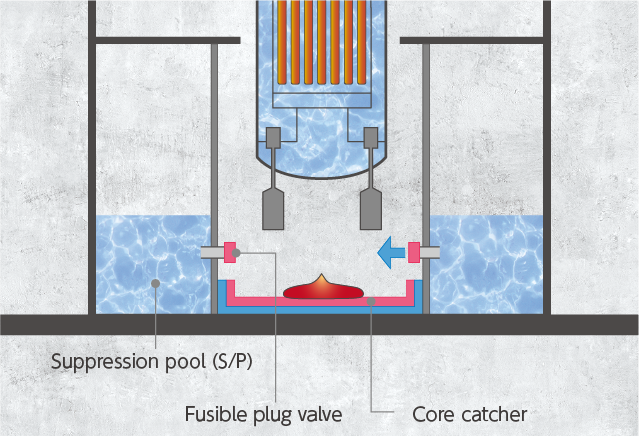
Should a core be damaged and molten fuel (debris) fall from the reactor pressure vessel, the fusible plug valve is activated by the radiation heat of the debris and other attributes, causing coolant to be injected using gravity. The coolant is able to cool the debris for three days. Furthermore, a core catcher is provided to prevent floor erosion caused by the debris.